Facts about Estonia: Geography, Capital and Key Information
Introduction
Facts about Estonia reveal a small but remarkable country tucked into the northeastern corner of Europe. Bordering the Baltic Sea, Estonia is known for its medieval old towns, vast forests, and its reputation as one of the most digitally advanced nations in the world. Despite its modest size, Estonia has a rich history shaped by centuries of foreign rule before regaining independence, and today it stands as a proud member of the European Union and NATO. This article explores Estonia’s geography, culture, and the many interesting details that make this Baltic nation worth learning about.
Quick Facts about Estonia
- Capital city: Tallinn
- Population (approx.): 1.3 million
- Area (km²): 45,227
- Currency: Euro (EUR)
- Official language(s): Estonian
- National Day: February 24 (Independence Day)
Geography and Landscape
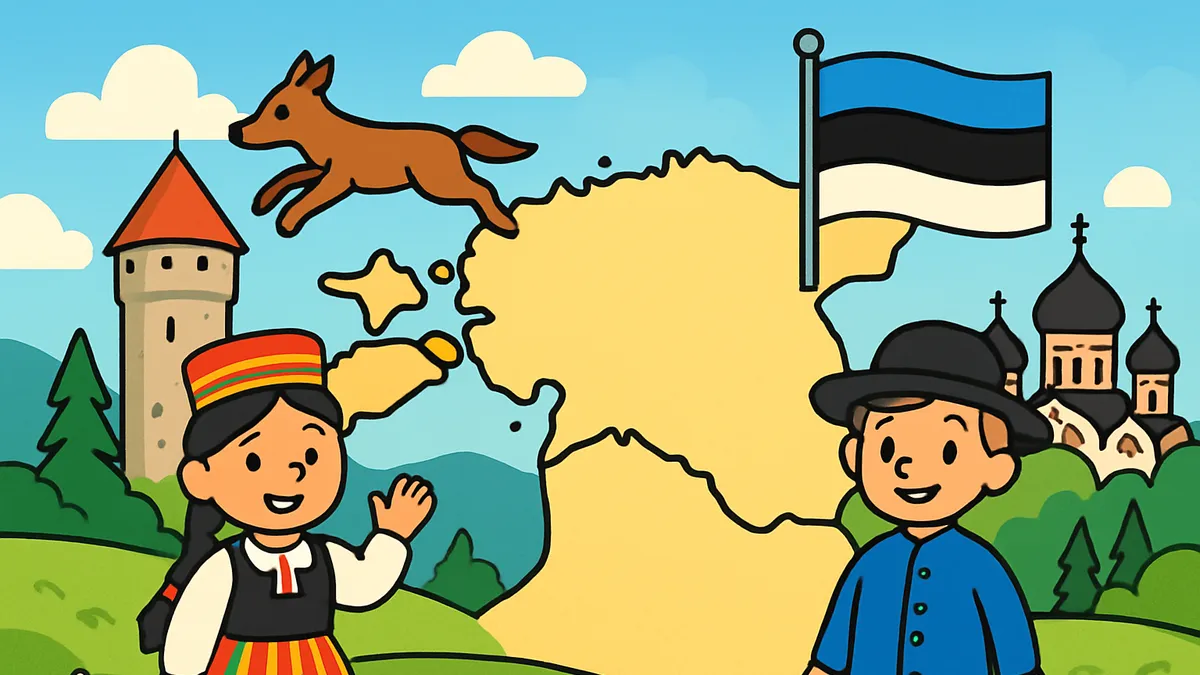
Estonia is the northernmost of the three Baltic states, sharing its southern border with Latvia and its eastern border with Russia. To the north, Estonia faces Finland across the Gulf of Finland, while the Baltic Sea and the Gulf of Riga define much of its western coastline. The country’s landscape is largely flat, shaped by glaciers during the last Ice Age, and dotted with thousands of lakes, the largest being Lake Peipus, which forms part of the border with Russia.
Forests cover more than half of Estonia’s territory, making it one of the greenest countries in Europe. Wetlands, bogs, and nature reserves are common, and the country is home to abundant wildlife, including brown bears, lynxes, and wolves. Estonia’s coastline is remarkably long and irregular, featuring over 2,000 islands, with Saaremaa and Hiiumaa being the largest and most well-known. These islands offer quiet villages, lighthouses, and windmills that reflect the country’s maritime traditions.
One of Estonia’s most treasured natural areas is Lahemaa National Park, the country’s oldest and largest national park, located along the northern coast. It combines dense pine forests, rocky beaches, historic manor houses, and traditional fishing villages, giving visitors a glimpse of Estonia’s untouched wilderness. Inland, the town of Tartu sits along the Emajõgi River and is often called the country’s intellectual capital, home to the University of Tartu, one of the oldest and most respected universities in Northern Europe.
Population and Culture
Estonia has a population of roughly 1.3 million people, making it one of the least densely populated countries in the European Union. Around a third of the population lives in the capital, Tallinn, a city famous for its beautifully preserved medieval Old Town, which is recognized as a UNESCO World Heritage Site. Estonian culture places great value on nature, silence, and independence, traits often reflected in the national character.
Music plays a central role in Estonian identity, particularly through the tradition of song festivals. The Estonian Song and Dance Celebration, held every five years, brings together tens of thousands of singers and dancers and is recognized by UNESCO as a masterpiece of intangible cultural heritage. Estonians are also known for their strong connection to sauna culture, midsummer bonfire celebrations, and a deep respect for education, with the country consistently ranking among the top performers in international student assessments.
Estonian cuisine reflects the country’s rural roots and Baltic Sea location, with dark rye bread, smoked fish, potatoes, and dairy products forming the backbone of traditional meals. Black bread in particular is considered a symbol of national identity, and many Estonians living abroad list it among the foods they miss most. Modern Tallinn also has a thriving café and restaurant scene, blending traditional recipes with contemporary Nordic-inspired cooking.
3 Interesting Facts about Estonia
- Estonia is a global pioneer in digital governance, offering e-Residency to people worldwide and allowing citizens to vote, file taxes, and access nearly all public services online.
- The technology behind Skype was originally developed by Estonian engineers, cementing Estonia’s reputation as a hub for innovation and startups.
- Estonia has more than 2,000 islands along its coast, yet most remain uninhabited and untouched, offering some of the most peaceful natural scenery in the Baltic region.
Where is Estonia Located?
Estonia is located in Northern Europe, in the region often referred to as the Baltic states, alongside Latvia and Lithuania. It borders Latvia to the south and Russia to the east, while the Baltic Sea separates it from Sweden to the west and the Gulf of Finland separates it from Finland to the north. This coastal position has historically made Estonia an important crossroads for trade routes between Scandinavia, Russia, and the rest of continental Europe.
Discover More About European Countries
Curious to learn more about the countries of Europe and beyond? Our illustrated books are designed to make geography fun and engaging for readers of all ages, combining colorful maps, flags, and fascinating facts about every country.
The European Countries Book – Extended Color Edition
https://www.amazon.com/dp/B0G33G45CJ
The European Countries Book – Color Edition
https://www.amazon.com/dp/B0FX9C7TS5
The European Countries Book – Black & White Edition
https://www.amazon.com/dp/B0FDRXJX7C
The European Countries Book – Color Quiz Edition
https://www.amazon.com/dp/B0HKMZJXPB
The European Countries Book – Black & White Quiz Edition
https://www.amazon.com/dp/B0HKLBS4SP