Facts about Kosovo: Geography, Capital and Key Information
Introduction
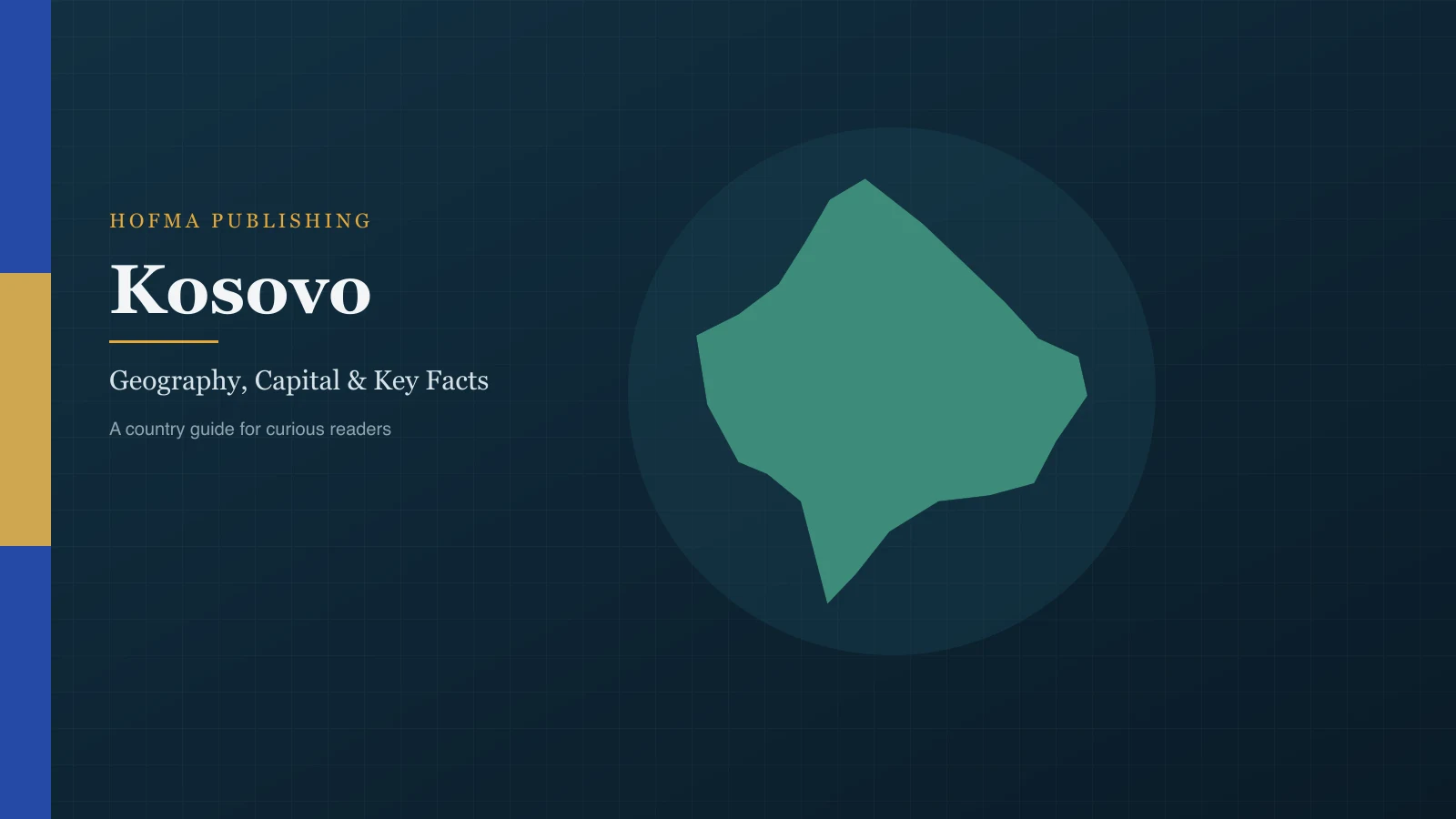
Kosovo is a small, landlocked territory in the heart of the Balkan Peninsula in southeastern Europe. Facts about Kosovo reveal a land of high mountains, wide fertile plains, Ottoman-era towns and medieval monasteries. Kosovo declared independence from Serbia in 2008, which makes it one of the newest states on the map of Europe. Its status is still disputed: many countries recognise Kosovo as independent, while Serbia and a number of others do not. This article explores the geography, population and culture of Kosovo for students, teachers and curious readers.
Quick Facts about Kosovo
- Capital city: Pristina
- Population (approx.): 1.6 million
- Area (km²): 10,900
- Currency: Euro (EUR)
- Official language(s): Albanian and Serbian
- National Day: February 17 (Independence Day)
Geography and Landscape
Kosovo covers about 10,900 square kilometers, which makes it a little smaller than Montenegro and roughly a quarter the size of Denmark. Although it is small, the landscape is varied. The center of the territory is made up of two large basins surrounded by mountains, a little like two bowls set side by side.
In the east lies the Kosovo Plain, a high, open area where the capital Pristina is located. In the west lies the Dukagjin Plain, also known as Metohija, a warmer and very fertile region known for its vineyards, orchards and farmland. A range of hills separates the two plains.
Mountains form a natural frame around almost the entire territory. In the west, the Accursed Mountains, also called Prokletije, rise along the borders with Albania and Montenegro. This rugged range holds Kosovo’s highest peak, Gjeravica, at about 2,650 meters. In the south, the Šar Mountains stretch toward North Macedonia and are home to the popular ski area of Brezovica. The Kopaonik range touches Kosovo in the north.
Several rivers begin in or cross Kosovo. The White Drin flows through the western plain toward Albania and the Adriatic Sea, while the Ibar runs through the north. In the center of the territory, the Mirusha River tumbles over a chain of waterfalls and small lakes, a favorite spot for hikers. The climate is continental, with warm summers and cold, often snowy winters, especially in the mountains.
Population and Culture
Around 1.6 million people live in Kosovo. Pristina is the capital and largest city and the center of government, business and university life. Other important towns include Prizren, Peja, Gjakova, Mitrovica, Ferizaj and Gjilan.
The large majority of the population are Albanians, and Serbs form the largest minority. Smaller communities include Bosniaks, Turks, Roma, Gorani, Ashkali and Egyptians. Albanian and Serbian are both official languages, and Turkish and Bosnian are also recognised in some municipalities. Most people are Muslim, while many Serbs belong to the Serbian Orthodox Church, and there is a small Catholic community.
Kosovo has one of the youngest populations in Europe, and this shows in the busy cafés, music festivals and lively evening walks in town centers. Coffee culture is very important, and macchiato is the classic order in Pristina. Traditional dishes include flija, a layered pancake baked slowly under a metal lid, and pite, a savory pie filled with cheese, meat or spinach. The historic town of Prizren hosts DokuFest, an international documentary and short film festival held every summer.
3 Interesting Facts about Kosovo
- Kosovo uses the euro even though it is not a member of the European Union. It first adopted the German mark in 1999 and switched to the euro when the mark was replaced in 2002.
- Kosovo’s rivers flow toward three different seas: the White Drin toward the Adriatic, the Ibar toward the Danube and the Black Sea, and the Lepenac toward the Vardar and the Aegean Sea.
- Four medieval Serbian Orthodox churches and monasteries in Kosovo, including the monastery of Visoki Dečani and the Patriarchate of Peć, are protected together as a UNESCO World Heritage Site, famous for their colorful frescoes.
Where is Kosovo Located?
Kosovo is located in the central part of the Balkan Peninsula in southeastern Europe. It has no coastline. Serbia lies to the north and east, North Macedonia to the southeast, Albania to the southwest and Montenegro to the west.
The nearest coast is the Adriatic Sea, reached by crossing the mountains of Albania or Montenegro. Kosovo sits close to the meeting point of several Balkan countries, and for centuries trade routes have crossed its plains on the way between the Adriatic and the Aegean.
Discover More About European Countries
If learning facts about Kosovo has made you curious about its Balkan neighbors and the rest of the continent, there is plenty more to explore. These books bring together maps, capitals, flags and fun facts about the countries of Europe, made for children, families and classrooms who want to discover more together.
The European Countries Book – Extended Color Edition
https://www.amazon.com/dp/B0G33G45CJ
The European Countries Book – Color Edition
https://www.amazon.com/dp/B0FX9C7TS5
The European Countries Book – Black & White Edition
https://www.amazon.com/dp/B0FDRXJX7C
The European Countries Book – Color Quiz Edition
https://www.amazon.com/dp/B0HKMZJXPB
The European Countries Book – Black & White Quiz Edition
https://www.amazon.com/dp/B0HKLBS4SP